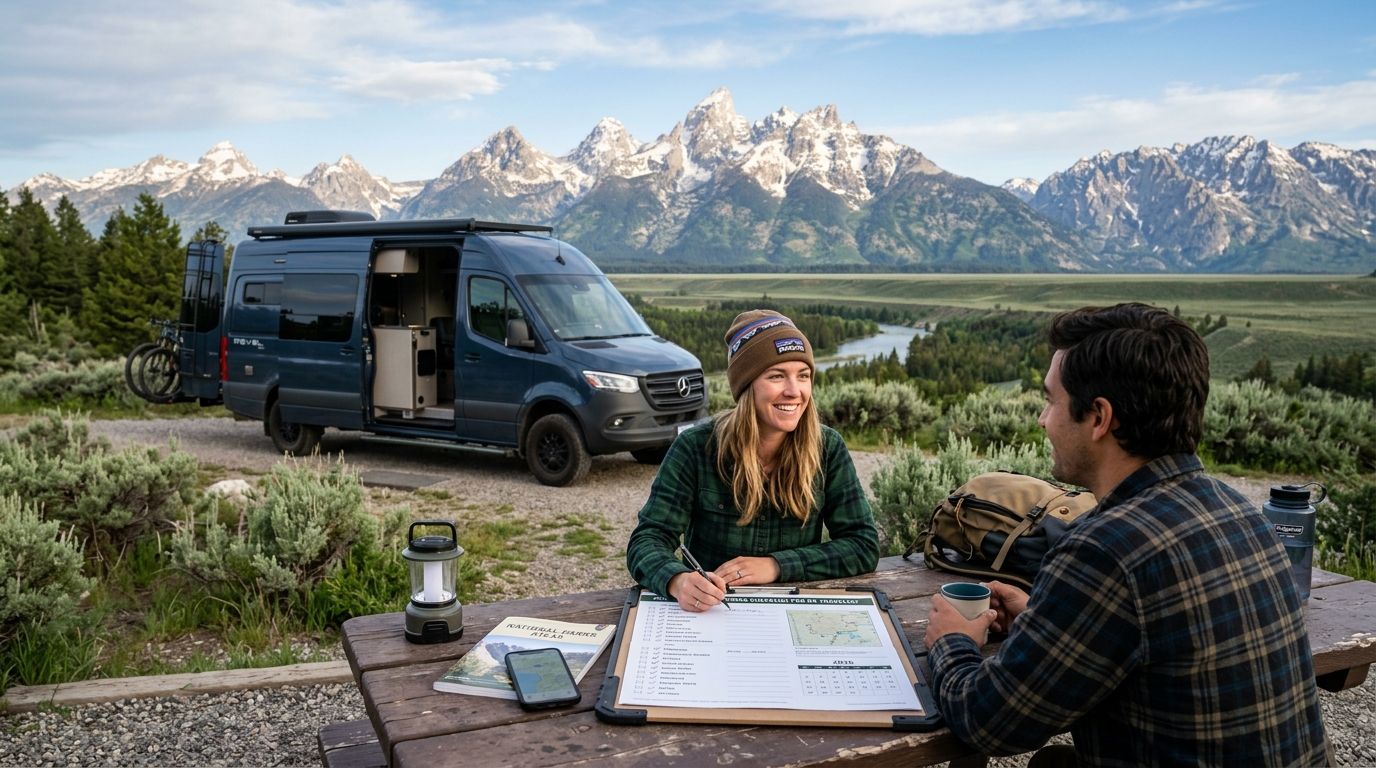
National parks checklist for RV travelers is a park-by-park tracking system built around drivable loops, rig-length limits, and campground booking windows, not just a scenic bucket list. RVers face road restrictions, timed-entry permits, and fuel-range math that hikers and fly-in visitors never think about, so a generic park list falls apart fast on a real road trip.
- A national parks checklist for RV travelers works best when it's organized by drivable route and rig-size restriction, not alphabetically.
- Several national parks including Zion, Arches, Rocky Mountain, and Glacier now run timed-entry systems during peak season.
- There are 63 designated U.S. national parks in 2026, and most RV road-trippers realistically log 12-20 of them per year.
- Campground reservations at popular parks fill 6-12 months ahead, so the checklist step that matters most happens before you ever leave the driveway.
- A printable park-by-park passport beats a phone app when you're parked somewhere without signal, which is most of the time.
Why a national parks checklist matters for RV travelers
RV travel changes the math on almost everything a hiker or day-tripper takes for granted. A 34-foot Class A can't take the switchbacks into Zion Canyon or squeeze through the Wawona Tunnel approach at Yosemite without a plan, and plenty of scenic drives inside the parks post hard length and height limits.
Campground booking windows compound the problem. Sites inside parks like Glacier, Grand Teton, and Acadia go in the first hour they open on Recreation.gov, often 6 months out, which means the checklist step of "pick a park" has to happen well before the trip does. A national parks checklist for RV travelers needs to double as a planning document, not just a souvenir.
Fuel range and dump-station spacing matter too. Big rigs burn through diesel fast in mountain terrain, and dry camping stretches between parks in places like the Utah Mighty Five or Montana's Glacier corridor can run 100+ miles between services. None of that shows up on a standard national park checklist built for backpackers.
Map your route by rig length and road restrictions
Start with the road, not the park. Every national park publishes vehicle length and height restrictions for its scenic drives, and RVers who skip this step end up backing down a one-lane switchback.
- Pull each park's official RV/vehicle-size page before you commit to a route
- Flag any tunnels, hairpin switchbacks, or unpaved sections your rig can't handle
- Note which parks have a park-and-ride shuttle system instead of private vehicle access
- Build a driving order that avoids backtracking through mountain passes
- Mark low-clearance bridges and narrow bridges on secondary approach roads
Reserve campgrounds and timed-entry permits early
Booking is the step that actually determines whether your trip happens. Do this manually first with a spreadsheet or a paper wall calendar before anything else.
- Set a Recreation.gov account and calendar alert for each park's release date
- Book RV-specific sites (with hookups or pull-through length) rather than tent sites
- Check whether the park runs a timed-entry reservation system during peak months
- Have a backup dispersed-camping or national forest site ready if inside-park sites sell out
- Cross-reference entry permits against your driving-route order so you're not doubling back
A handful of parks, including Zion, Arches, Rocky Mountain, and Glacier, run seasonal timed-entry systems that cap daily vehicle traffic. Miss the reservation window and you're rerouting the whole week, so this step goes first, not last.
Track fuel range and dump-station stops
RV-specific logistics that a generic bucket list ignores completely. Build this into the same document as your park checklist so you're not improvising at 2 gallons left in the tank.
- Log your rig's realistic mileage-per-gallon in mountain terrain, not highway-rated numbers
- Mark dump stations and potable water fills along your route, not just inside parks
- Note which gateway towns have diesel and propane versus gas-only stations
- Build in a buffer day between remote parks where services thin out
Build your park-by-park checklist
The manual version is a spreadsheet with one row per park: name, region, entry date, campsite confirmation number, and a done/not-done column. That works fine if you're organized and don't mind building the template yourself.
The faster path is a printable passport built specifically for this, like the national park checklist tracker from Triptyka, which lays out all 63 parks by region so you can plan a driving loop instead of hopping randomly around the map. It's a download-and-print product, so there's no app to sync and no signal required at the campsite.
- List every park by region so you can plan contiguous driving loops
- Leave space next to each park for the date visited and campground name
- Track which parks still need a timed-entry reservation booked
- Keep a paper backup even if you also use a phone app, since cell coverage inside most parks is spotty at best
Log the signature experience at each stop
Checking a box is satisfying, but the detail you'll actually remember is the one thing that made the stop worth the diesel. Note it while you're there, not three parks later when it's all a blur.
- Write down the best overlook, trailhead, or drive-through view at each park
- Note ranger-recommended stops that aren't on the main map
- Record which visitor center had the best Junior Ranger program if you're traveling with kids
- Add the one restaurant or roadside stop in the gateway town worth a detour
If your route runs through drivable scenic corridors between parks, a scenic byway checklist fills the gap a national-park-only tracker leaves blank, since a lot of the best RV road-trip miles happen between the park gates, not inside them.
Track your pass and passport stamps
Most RV park-hoppers use an annual pass rather than paying per-park entry fees, and every park has a free cancellation stamp station at the visitor center that's separate from any printable checklist you're keeping.
- Get your park passport book stamped at the visitor center on arrival, not departure, in case you leave before it opens the next day
- Keep the pass and vehicle registration together in the glovebox, not buried in a drawer
- Note the pass expiration date on your checklist so you're not caught renewing mid-trip
Comparison: tracking options for RV road-trippers
| Option | Best for | Key limitation |
|---|---|---|
| NPS app | drivers who want live alerts and offline maps | no printable record, battery/signal dependent |
| DIY spreadsheet | travelers who want full custom fields | no built-in park data, easy to lose the file |
| Checkli | generic digital checklist users | not travel-specific, no route or region grouping |
| Triptyka national park checklist | collectors who want a print-and-hang route tracker | download-and-print only, no live app sync |
Verdict: for RV travelers specifically, a printable park-by-park checklist beats an app-only tracker because it doesn't die when the campground has zero bars.
Grab the printable park tracker
A downloadable checklist for all 63 U.S. national parks.
Common mistakes RV travelers make
- Booking campgrounds a week out. Popular in-park sites at Glacier, Grand Teton, and Acadia sell out 6-12 months ahead, not days.
- Ignoring rig-length restrictions. A missed size limit means a 45-minute turnaround on a canyon road with no shoulder.
- Overloading the itinerary. Trying to hit 8 parks in 10 days burns fuel budget and turns every stop into a drive-by.
- Skipping timed-entry systems. Parks like Zion and Arches cap daily vehicle entries in peak season; showing up without a reservation means turning around at the gate.
- Tracking on a phone with no backup. A dead battery or dead zone erases a week of logged stops if the checklist only lives in an app.
If your route extends beyond the federal park system, a state park checklist covers the gateway parks that sit right next to the big-name national parks and often have shorter reservation windows.
FAQ
What's the best national parks checklist for RV travelers in 2026?
A printable checklist organized by region, like Triptyka's national park tracker, works best for RV travelers because it supports route planning offline, without depending on app signal at remote campsites.
How many national parks can an RV realistically visit in one trip?
Most RV road-trippers log 12-20 of the 63 designated national parks per year-long circuit, factoring in campground booking windows and driving days between regions.
Do all national parks allow RVs on scenic drives?
No. Several parks post length and height restrictions on specific roads, and RVers should check each park's official vehicle-size page before routing through canyon or mountain drives.
Which national parks require timed-entry reservations?
Zion, Arches, Rocky Mountain, and Glacier are among the parks that run seasonal timed-entry systems during peak months, capping daily vehicle traffic.
Is a printable checklist better than a national parks app for RV trips?
For RV travel specifically, yes, because a printable checklist works with zero cell signal, which covers most campgrounds and canyon routes inside the parks.
How far ahead should RVers book national park campgrounds?
Book 6-12 months out for the most popular in-park sites at Glacier, Grand Teton, Yosemite, and Acadia, since those release windows fill within hours.
What should an RV national parks checklist track besides park visits?
It should log campground confirmation numbers, entry-permit dates, fuel and dump-station stops, and the signature experience at each park, not just a visited/not-visited checkbox.
One last thing
The U.S. sits at 63 designated national parks in 2026, with New River Gorge in West Virginia the most recent addition to the list. Most RV travelers never plan to hit all 63 in one shot, and that's the right instinct: pick a region, build the loop around drivable roads and reservation windows, and let the checklist grow over multiple trips instead of one exhausting marathon.