A typical craft brewery trail lists around 20 breweries in 2026, though published trails run anywhere from 6 stops on a small metro ale trail to more than 40 on a multi-state route. The real complication is that "trail" isn't a standardized term — some official state programs count only breweries with a taproom license, while road-trip bucket lists built by travelers often lump in cideries, meaderies, and brewpubs, which inflates the number fast.
- A typical craft brewery trail runs 15 to 25 breweries, based on published state and regional trail guides in 2026.
- Metro ale trails (single city or county) usually list 6 to 15 stops.
- Multi-state regional trails can top 40 breweries once cideries and brewpubs are folded in.
- There's no single governing body defining 'craft brewery trail,' so counts vary by who built the list.
- A printable craft brewery trail checklist from Triptyka lets you track your own count regardless of the official number.
Why this matters
If you're planning a trip around "the brewery trail" in your state, the headline number on a tourism board's website rarely tells you what you're actually signing up for. A 15-stop trail in a single county is a weekend. A 40-stop multi-state trail is a project that could take years to finish properly, and that gap changes how you plan gas money, hotel nights, and designated drivers.
Knowing the real range also matters if you're the type who likes checking things off — travelers who track visits city by city or trail by trail want an honest count before they commit to chasing every stop.
How many breweries are on a craft brewery trail?
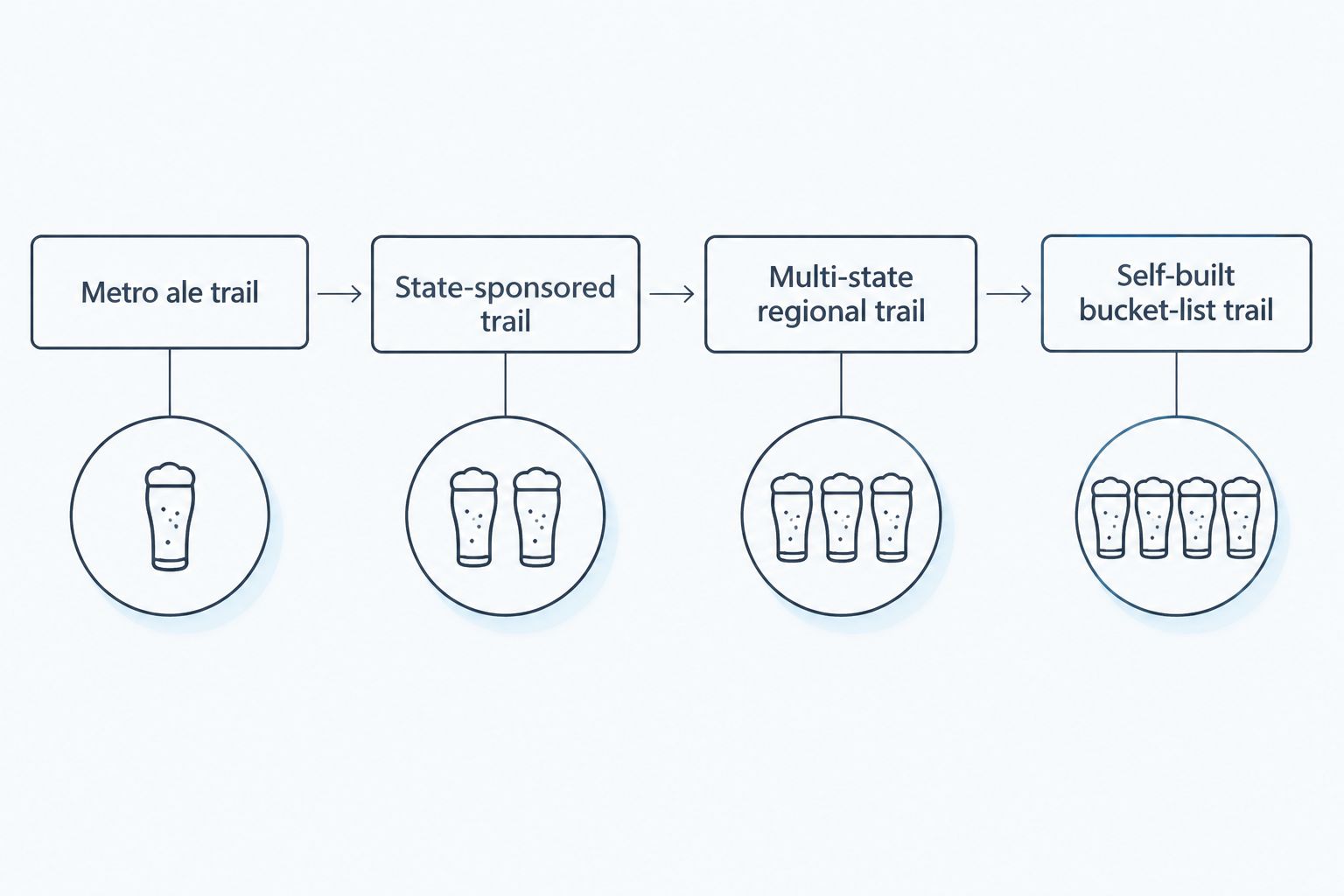
Counts cluster around a few common trail formats. Here's how they typically break down based on published state, city, and regional brewery trail programs active in 2026:
| Trail type | Typical brewery count | Best for |
|---|---|---|
| Metro / city ale trail | 6–15 | A weekend or single day trip |
| State-sponsored trail | 15–25 | A multi-weekend project |
| Multi-state regional trail | 25–40+ | Serious collectors and road-trippers |
| Self-built bucket-list trail | Varies (you decide) | Travelers who want full control |
The pattern holds across most beer-heavy states: the smaller the geographic footprint, the shorter the list, and the wider the footprint, the more breweries — plus cideries and meaderies — get swept into the count.
Metro ale trails: 6–15 breweries
City-level trails, the kind a downtown brewers guild or visitor's bureau runs, tend to stay tight — 6 to 15 stops is normal. These are built to be walkable or drivable in a single day or weekend, so organizers keep the list short on purpose. Best for anyone who wants a finishable trail without a multi-month commitment.
State-sponsored trails: 15–25 breweries
This is the most common format and the one most people picture when they hear "craft brewery trail." A state tourism office or brewers association compiles a list of member breweries, usually landing in the 15-to-25 range. These trails often come with a passport program, a stamp card, or a similar incentive to visit every stop. Best for travelers who want structure and an end point that's actually reachable in a season.
Multi-state regional trails: 25–40+ breweries
When a trail spans a whole region — a stretch of highway, a river valley, a group of neighboring states — the count climbs fast. These lists frequently blend breweries with cideries, meaderies, and brewpubs, which is why the total can clear 40. Best for dedicated collectors who treat the trail as a long-term project rather than a single trip.
Self-built bucket-list trails: however many you decide
A lot of travelers skip the official list entirely and build their own — every brewery within driving distance, every stop from a road trip, every taproom a friend recommended. There's no ceiling here, and no floor either. Best for anyone who wants to track their own progress instead of chasing someone else's list.
Why brewery trail counts vary
A handful of factors decide whether a given trail lands at 10 stops or 40:
- Who defines "craft." Some lists exclude breweries owned by larger beverage companies; others don't.
- Whether cideries and meaderies count. Many regional trails fold these in, which pads the total.
- Geographic scope. A single-city trail and a five-state trail aren't measuring the same thing.
- How often the list gets updated. Breweries open and close constantly, so a trail published in 2022 can be badly out of date by 2026.
- Whether brewpubs (food-first, beer-second) are included. Some trails treat them as full stops; others leave them off.
- Marketing incentives. A bigger number looks more impressive on a tourism website, so some organizers count generously.
Related questions
How does a brewery trail compare to the Kentucky Bourbon Trail?
The Kentucky Bourbon Trail's distillery count is fixed by an official trade group, which is why it's one of the more consistent numbers in the bucket-list world — brewery trails, by contrast, have no single governing body, so the count shifts depending on which list you're using.
How long does it take to finish a typical brewery trail?
A 15-to-25-stop state trail is realistically a season-long project for most people, spread across weekend trips rather than one marathon drive. A 40-plus-stop regional trail is closer to a multi-year hobby, especially once you factor in breweries that only pour on certain days.
Is there an official master list of every craft brewery trail?
No — trails are built independently by state tourism boards, brewers guilds, city visitor bureaus, or individual travelers, so there's no single authoritative count of how many trails exist or how many breweries sit on each one.
For collectors who'd rather build and track their own list than rely on someone else's official number, a craft brewery trail checklist works whether you're chasing a 12-stop metro trail or a 40-stop regional one — you set the list, you check off the visits. The same format also shows up as a brewery trail checklist for bachelor party planners, since group trips tend to need a shared, printable version everyone can mark up.
Track your own brewery trail
A printable checklist that works for any trail size, official or self-built.
FAQ
How many breweries are on a typical craft brewery trail?
A typical craft brewery trail lists 15 to 25 breweries in 2026, though metro-level trails run as few as 6 and multi-state regional trails can top 40.
What's the difference between a state trail and a regional trail?
A state trail usually stays within one state's borders and lists 15 to 25 breweries, while a regional trail spans multiple states and often exceeds 25 to 40 stops once cideries and meaderies are included.
Do brewery trail counts include cideries and meaderies?
It depends on the trail. Many multi-state regional trails fold cideries and meaderies into the total, which is a big reason those lists run longer than single-city ale trails.
Is the Kentucky Bourbon Trail bigger than most brewery trails?
The Kentucky Bourbon Trail's distillery count is set by an official trade group, giving it a fixed number, while most craft brewery trails are built independently and vary widely depending on the source.
How long does it take to complete a 25-stop brewery trail?
A 25-stop trail typically takes a full season of weekend trips for most travelers, longer if breweries only pour on limited days.
Can I make my own brewery trail instead of following an official one?
Yes, many travelers build a self-defined list from breweries within driving distance rather than following a state or regional trail, and a printable checklist tracks that just as well.
Are brewery trail lists updated regularly?
Not always. Breweries open and close often, so a trail list published even a few years ago can be out of date by 2026 — check the source's last update date before planning around it.
One last thing
The number on a tourism website is a starting point, not a finish line — most serious trail-chasers end up adding a few breweries the official list skipped and dropping one or two that closed. Track your own version instead of the published one, and the count that matters is the one you're actually working toward.